Vermeer: A Life Lost and Found, by Andrew Graham-Dixon
- Get link
- X
- Other Apps
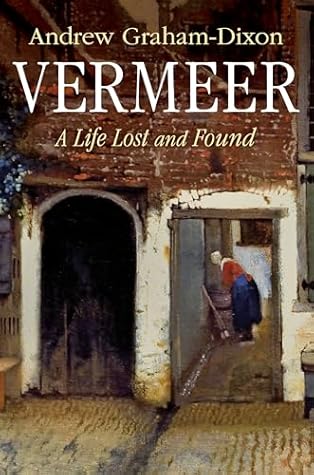
Vermeer: A Life Lost and Found
by

The author writes that the painting depicts the next two sentences from the New Testament:
by
The Dutch painter Johannes Vermeer has been a challenge for art historians because he created few contemporaneous records within the art market of his own era. Furthermore, his enigmatic paintings never seem to tell a clear story though their beauty and art are compelling. Vermeer’s paintings were largely lost to history for nearly two centuries after his 1675 death until they were rediscovered by Théophile Thoré (1807-1869) who rescued them from oblivion and gave Vermeer the descriptive nickname, the "Sphinx of Delft."
Graham-Dixon has achieved insight into the story and meanings of Vermeer’s paintings by researching his neighbors, associates, and patrons. That together with an understanding of the social and political history of the Dutch Republic and its slow progress toward a culture tolerant of numerous religious sects has shown that he and his parents lived within a religious circle of the Remonstrants and associated with the Collegiants movement of Dutch Protestantism. This research led the author to conclude that Vermeer was a religious painter whose paintings didn’t look like religious art.
One of the reasons Vermeer left so few tracks in the art market of his era was because almost all of his art was purchased by close friends. His neighbors, Maria de Knuijt and her husband Pieter van Ruijven commissioned and received almost all of his later paintings (over a 13 year period). They displayed those painting within their house that was used as a meeting place for regular private “hidden” prayer gatherings of women.
The author then proceeds to reinterpret Vermeer’s paintings in light of this background, and art enthusiasts will find these descriptions of particular interest. What makes them interesting is that they’re so different from more secular interpretations that have been previously suggested for the paintings. A summary review of some of these descriptions can be viewed and read at this detailed book review by Patrick T Reardon.
Another reason the religious perspective of this author's take on the life of Vermeer might be a surprise to fans of Vermeer is because his wife and mother-in-law were Catholic. It is known that his mother-in-law refused to sign an affidavit giving permission to her daughter’s betrothal to Vermeer. An affidavit signed by witnesses saying that they heard her say that she wouldn’t prevent them from being married was used in place of her signed consent. Vermeer’s marriage was a success if number of children is used as an indicating measure. They had fifteen children, eleven who survived to be baptized. (Wikipedia says ten.)
Information about his wife’s childhood is known in considerable detail because of court records related to her mother’s divorce from an abusive husband. Her father had been Protestant which may explain part of the reason for her mother's objection to her prospective marriage to Johannes.
This book describes Vermeer's relationship with his mother-in-law as an uneasy detente in which she arranged for the children's Catholic education and he continued to associate with the Remonstrants and liberal free thinkers. She helped pay some family expenses but not all his debts. The author sites evidence that Vermeer had his studio located someplace other than the house and didn't spend much time at home. The author also suggests that the relationship between Vermeer's mother and his mother-in-law was particularly frosty.
Of particular interest to me was the fact that Mennonites are frequently mentioned in this book. It is noted that some Mennonites participated in the Collegiants movement.
The book contains numerous illustrations throughout its pages including a number of color prints of paintings with descriptions in an "Illustrations Insert" section near the end of the book.
This podcast by "Conversations with Tyler" contains an hour long well done interview conversation with the author, Andrew Graham-Dixon.
Graham-Dixon has achieved insight into the story and meanings of Vermeer’s paintings by researching his neighbors, associates, and patrons. That together with an understanding of the social and political history of the Dutch Republic and its slow progress toward a culture tolerant of numerous religious sects has shown that he and his parents lived within a religious circle of the Remonstrants and associated with the Collegiants movement of Dutch Protestantism. This research led the author to conclude that Vermeer was a religious painter whose paintings didn’t look like religious art.
One of the reasons Vermeer left so few tracks in the art market of his era was because almost all of his art was purchased by close friends. His neighbors, Maria de Knuijt and her husband Pieter van Ruijven commissioned and received almost all of his later paintings (over a 13 year period). They displayed those painting within their house that was used as a meeting place for regular private “hidden” prayer gatherings of women.
The author then proceeds to reinterpret Vermeer’s paintings in light of this background, and art enthusiasts will find these descriptions of particular interest. What makes them interesting is that they’re so different from more secular interpretations that have been previously suggested for the paintings. A summary review of some of these descriptions can be viewed and read at this detailed book review by Patrick T Reardon.
Another reason the religious perspective of this author's take on the life of Vermeer might be a surprise to fans of Vermeer is because his wife and mother-in-law were Catholic. It is known that his mother-in-law refused to sign an affidavit giving permission to her daughter’s betrothal to Vermeer. An affidavit signed by witnesses saying that they heard her say that she wouldn’t prevent them from being married was used in place of her signed consent. Vermeer’s marriage was a success if number of children is used as an indicating measure. They had fifteen children, eleven who survived to be baptized. (Wikipedia says ten.)
Information about his wife’s childhood is known in considerable detail because of court records related to her mother’s divorce from an abusive husband. Her father had been Protestant which may explain part of the reason for her mother's objection to her prospective marriage to Johannes.
This book describes Vermeer's relationship with his mother-in-law as an uneasy detente in which she arranged for the children's Catholic education and he continued to associate with the Remonstrants and liberal free thinkers. She helped pay some family expenses but not all his debts. The author sites evidence that Vermeer had his studio located someplace other than the house and didn't spend much time at home. The author also suggests that the relationship between Vermeer's mother and his mother-in-law was particularly frosty.
Of particular interest to me was the fact that Mennonites are frequently mentioned in this book. It is noted that some Mennonites participated in the Collegiants movement.
The book contains numerous illustrations throughout its pages including a number of color prints of paintings with descriptions in an "Illustrations Insert" section near the end of the book.
This podcast by "Conversations with Tyler" contains an hour long well done interview conversation with the author, Andrew Graham-Dixon.
The following is this book's interpretation of the painting “Girl With Pearl Earring,” (which can be an example of this book's perspective).
The author writes that the painting depicts the next two sentences from the New Testament:
"Jesus saith unto her, Mary. She turned herself, and saith unto him, Rabboni; which is to say Master."This book sees “Girl With Pearl Earring” as the moment when Mary Magdalene recognizes the risen Jesus and feels a cascade a great, deep emotions.
"The look on her face expressed dawning recognition and wonder, mingled with awe, humility and love."Continuing with comments about “Girl With Pearl Earring,” the following is the author’s guess as to whom modeled for the painting. It’s interesting to note that Magdalena inherited the painting upon the death of her parents (included in a collection of twenty-one Vermeers), and that after her death her husband kept the collection together until his death.
Considering that the picture was made for Maria de Knuijt and her husband it is a fair assumption that the sitter was someone they knew and cared about. There is only one plausible candidate, namely their daughter, Magdalena van Ruijven. Magdalena was born in October 1655, so would have reached the age of twelve in the autumn of 1667. Assuming that she participated in the Collegiant movement she would probably have solemnized her commitment to Christ at that age, possibly undergoing baptism by full immersion at the summer gathering at Rijnsburg the following year. Vermeer's portrait of her in character may have been painted to mark that rite of passage. It could have been done either before or after the baptism itself, so it was probably completed sometime in 1667 or 1668.
- Get link
- X
- Other Apps


Comments
Post a Comment