What We Can Know, by Ian McEwan
- Get link
- X
- Other Apps
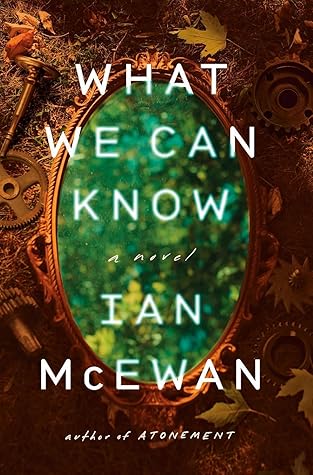
What We Can Know
by

by
Ian McEwan (Goodreads Author)
The same story gets told twice in this novel. It is first told in Part One of the book from the perspective of a literary historian in the year 2121 who is analyzing the lives of a poet and his wife who lived one hundred years earlier in 2021 (i.e. present time). Historical records indicate that a famous poet wrote a fantastic poem for his wife's birthday, but it was never published and no copy has ever been found. After examining all available records the historian is able to tell a detailed story about everyone who was present at the birthday party when the poem was recited by the poet.
Thus Part One of the book provides what appears to be a complete story, but still the poem has not been found. The mystery is why the poem was never published after being remembered by those present at its reading as an amazing poem? It consisted of fifteen sonnets, the final one of which, the corona (“the poem’s crown”), takes the first line of each of the proceeding fourteen sonnets, puts them together in strict sequence and makes “perfect and simple sense”.
Part Two of the book is narrated in the first person voice of the wife of the 2021 poet and she tells pretty much the same story, but she of course has the poem and knows essential details that the historian of a hundred years later did not have. She explains why she destroyed the only copy of the poem. (view spoiler)
Of course the barebones plot description provided above doesn't do the book justice. The author provides an interesting and descriptive account of what it must be like to do historical research with scattered and incomplete records and try to figure out what happened a hundred years earlier.
Also, since most of the book takes place one hundred years in the future the author does some clever imagining of what the people then will think about of us now. I thought the following excerpt was interesting in which a student is complaining about needing to study the history of the early 21st century.
Thus Part One of the book provides what appears to be a complete story, but still the poem has not been found. The mystery is why the poem was never published after being remembered by those present at its reading as an amazing poem? It consisted of fifteen sonnets, the final one of which, the corona (“the poem’s crown”), takes the first line of each of the proceeding fourteen sonnets, puts them together in strict sequence and makes “perfect and simple sense”.
Part Two of the book is narrated in the first person voice of the wife of the 2021 poet and she tells pretty much the same story, but she of course has the poem and knows essential details that the historian of a hundred years later did not have. She explains why she destroyed the only copy of the poem. (view spoiler)
Of course the barebones plot description provided above doesn't do the book justice. The author provides an interesting and descriptive account of what it must be like to do historical research with scattered and incomplete records and try to figure out what happened a hundred years earlier.
Also, since most of the book takes place one hundred years in the future the author does some clever imagining of what the people then will think about of us now. I thought the following excerpt was interesting in which a student is complaining about needing to study the history of the early 21st century.
Every day, we're being told about ... the idiocy of those times. The warming they ignored and all that. The stupid wars, the animals they killed, how skin color meant so much, on and on. The morons of long ago ...That's us he's talking about.
- Get link
- X
- Other Apps


Comments
Post a Comment