Nothing Random, by Gayle Feldman
- Get link
- X
- Other Apps
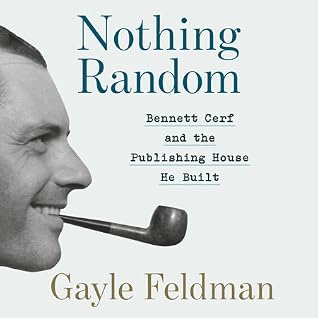
Nothing Random: Bennett Cerf and the Publishing House He Built
by

by
Gayle Feldman (Author, Narrator),
Lisa Flanagan (Narrator)
This is a biography of Bennett Cerf (1898-1971) who was the co-founder of the publishing firm Random House. However most people old enough to remember (including me) will know him from his weekly television appearances for 17 years on the panel game show “What’s My Line?” He is also known for his pun-filled newspaper and magazine columns and joke books plus his lecturer tours traversing the country.
This book’s review of Bennett’s involvement with the publishing business and competition with other publishers also provides an intimate history of many authors and books published during the era from the 1920s through the 1960s. One of Bennett Cerf’s early victories involved the 1934 court case that allowed James Joyce’s previously banned Ulysses to be legally available in the United States. He also published the controversial books Invisible Man, by Ralph Ellison in 1952 and Portnoy’s Complaint, by Philip Roth in 1969. He published authors from a wide range of perspectives including William Faulkner, Ayn Rand, and Eugene O’Neill.
He was also involved with getting many books used in movies, and in a few cases books inspired by movies. He was friends with many in Hollywood and was particularly close to Mia Farrow and Frank Sinatra.
The author of this book notes in a section “To The Reader” that the contract for this book was signed in 2002 and between then and its being published in 2026 she has been combing through an abundance of records and interviews researching for this book. One of her challenges was to separate fact from fiction of numerous anecdotes contained in Cerf’s posthumously published memoir in 1977. He had a self-acknowledged habit of exaggerating and mythologizing many of his memories. This book identifies numerous instances where historical documents disagree with his version of events and the book’s Notes section discusses some of these deviations.
It is apparent that the author was more concerned with thoroughness over writing a quick easy read by ending up with over 1,000 pages (35+ hrs audio) for the book.
- Get link
- X
- Other Apps


Comments
Post a Comment